
See Our Latest Blogs
Your go-to resource for marketing expertise
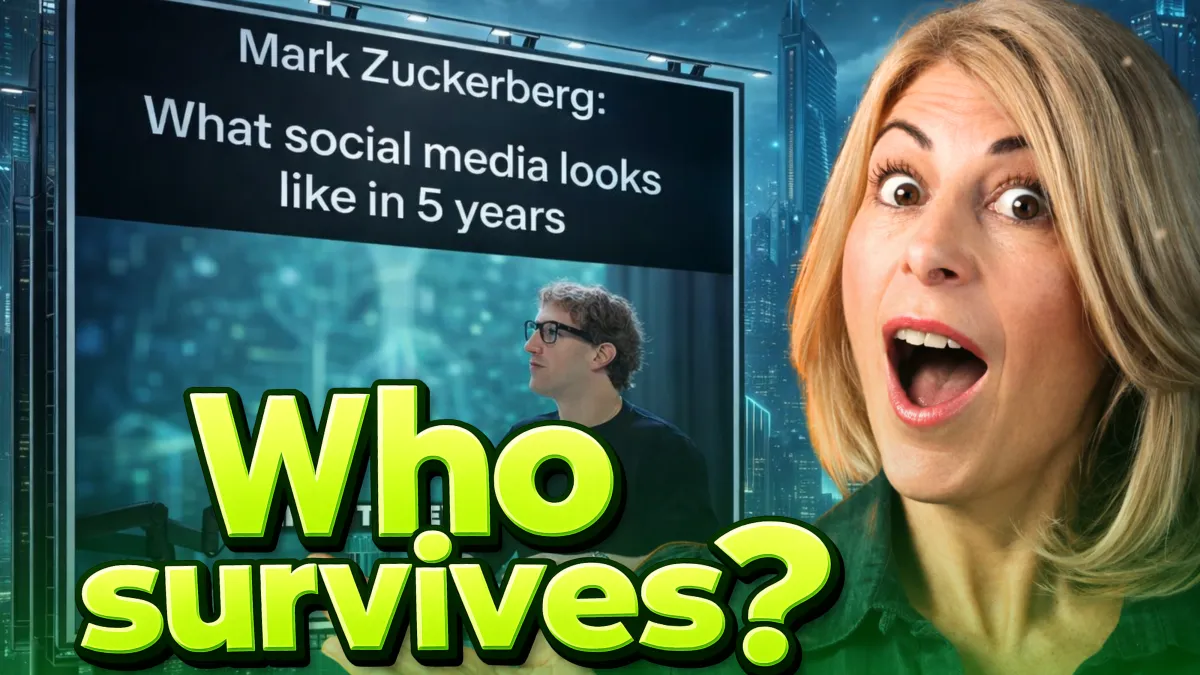
Is AI Really Replacing Marketers? A CEO’s Guide to What’s Actually Happening
If I had a dollar for every time I’ve seen a headline declaring “AI will replace marketers”, I’d probably let AI manage my bank account by now.
AI is everywhere. It’s writing captions, generating images, building ads, scheduling content and, according to some very confident people on the internet, doing the work of entire marketing teams “in one click”.
So let’s address the real question business leaders are asking:
Is AI actually replacing marketers or is something else going on?
The short answer is no, AI is not replacing marketers. The longer, more important answer is that AI is changing what good marketing looks like, and it’s doing it fast.
Why This Question Matters to Business Leaders
For CEOs, franchisors and corporate managers, this isn’t a theoretical debate. It affects:
·How you invest in marketing
·Whether you build in-house capability or outsource
·What skills you hire for
·How you protect your brand and revenue in an AI-saturated market
Ignoring AI is not an option. Blindly trusting it is risky. Understanding where it fits is essential.
What AI Is Very Good At (And Why It’s Impressive)
Let’s give credit where it’s due.
AI tools today can:
Generate blogs, captions, ads and video ideas at scale
Repurpose content across platforms
Analyse data faster than humans ever could
Automate scheduling, reporting and optimisation
Reduce time spent on repetitive marketing tasks
For businesses, this means speed, efficiency and cost reduction, all very attractive outcomes.
And yes, many of the tasks businesses used to pay agencies or staff thousands of dollars for can now be supported by AI.
That’s not hype. That’s reality.
What AI Cannot Do (And Why Marketing Still Needs Humans)
Here’s where the narrative starts to break down.
AI does not understand:
Your commercial priorities
Your business model
Your customer’s emotional triggers
Market nuance
Brand risk
Long-term growth strategy
Marketing is not just output. It’s decision-making.
AI can generate content, but it does not know:
What to say
Why it matters
When to say nothing
How a message lands with a skeptical or fatigued audience
This is especially important now, because AI has created a new challenge for brands and that is trust erosion.
The Trust Problem AI Has Created
Consumers are becoming more cautious. They question:
Is this real?
Is this authentic?
Is this brand human or automated?
Marketing’s core function has always been to build trust at scale. AI alone cannot do that.
In fact, overuse of AI without strategy often does the opposite, it creates generic, repetitive messaging that blends into the noise. This is why strong brands are not choosing AI instead of humans. They are choosing AI guided by humans.
What Big Platforms Aren’t Saying Loudly Enough
Meta, Google and other platforms are pushing automation hard and understandably so. Automation increases ad spend and platform revenue.
Yes, advertising tools are becoming easier to use.
Yes, you can now launch ads with minimal setup. But ease of use does not equal effectiveness.
Behind every profitable campaign is still:
A clear objective
A defined customer
A considered message
Ongoing optimisation
Strategic interpretation of results
Automation removes friction, and it does not replace strategy.
How Leading Brands Are Using AI Properly
The smartest brands are doing three things:
Using AI to enhance creativity, not replace it
Testing AI in controlled, low-risk environments
Maintaining human oversight where brand, trust and revenue are at stake
Coca-Cola is a perfect example. Their use of AI in advertising didn’t remove emotion, it preserved it. They integrated AI carefully, without losing brand consistency or meaning.
That’s not accidental. That’s leadership.
What This Means for CEOs, Franchisors and Corporate Managers
If you lead a business, the question isn’t whether you should use AI. You should.
The real questions are:
Where does AI add value?
Where does it introduce risk?
Who is responsible for oversight?
How does it align with business outcomes?
AI is a powerful accelerator, but it accelerates whatever direction you’re already heading in.
If your strategy is unclear, AI makes that visible faster.
The Future of Marketing Is Human-Led and AI-Enabled
Marketing is not becoming less human. It’s becoming more strategic.
AI will:
Handle execution faster
Personalise experiences at scale
Enable interactive, adaptive content
Humans will:
Set direction
Protect brand integrity
Interpret behaviour
Make judgement calls
Build trust
That balance is where competitive advantage lives.
AI is not replacing marketers.
It’s replacing guesswork, inefficiency, and outdated thinking. Businesses that understand this will grow faster, smarter and more sustainably. Those that don’t, will simply produce more content and wonder why results didn’t follow. And that’s the difference between using AI and leading with it.
If you’re a CEO, franchisor or business leader who knows AI matters but wants clarity on how to use it strategically, let’s talk. Book your discovery call here.
This blog is inspired by Episode 69 of The Marketing Factory Podcast. Watch the full episode now.


Head Office (Brisbane)
Level One, 88 Tribune Street
South Brisbane QLD 4101
0434 520 902
COMPANY
CUSTOMER CARE
LEGAL
FOLLOW US


© 2026 The Marketing Factory - All Rights Reserved.