
See Our Latest Blogs
Your go-to resource for marketing expertise
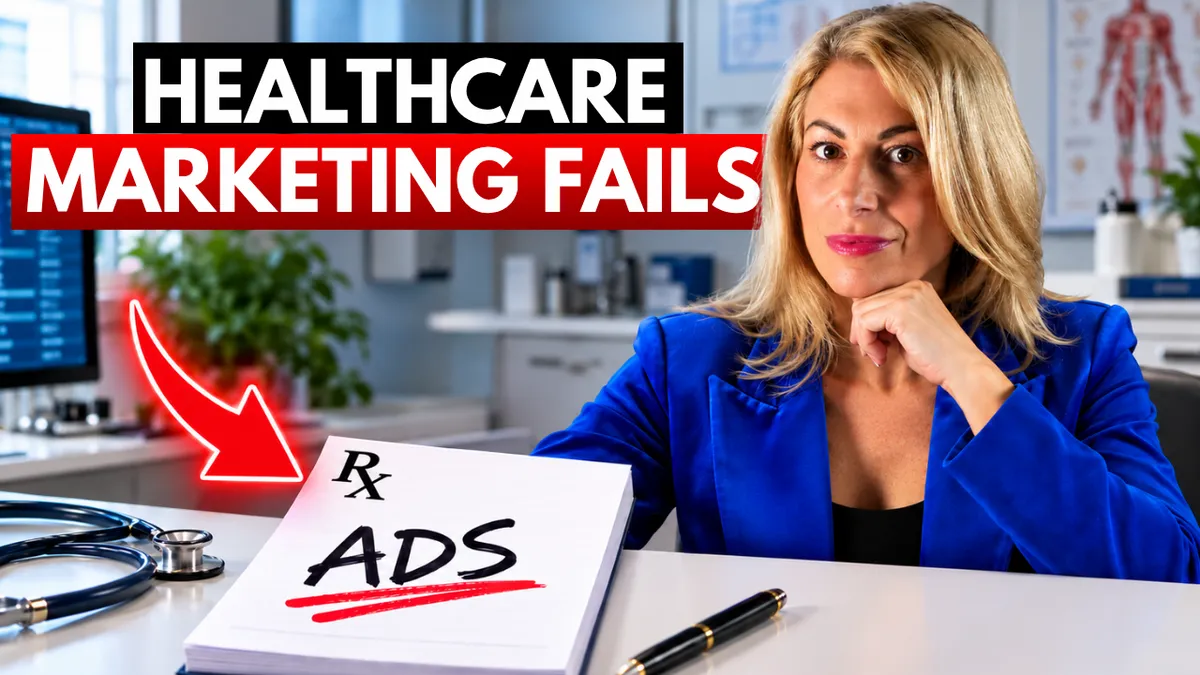
Stop Prescribing Marketing Before You’ve Diagnosed the Problem
Your bookings are down, so you boost a few posts. Enquiries dry up, so you blame Google Ads. Revenue softens, so someone suggests a rebrand. Sound familiar?
If you run a medical centre, dental clinic or allied health practice, you’ve probably been in that meeting. And if the plan was settled within ten minutes, there’s a fair chance you were prescribing before you’d diagnosed.
Why healthcare marketing so often misses
Imagine a GP who walked you into the consulting room, glanced at you for three seconds, then wrote a script without asking a single question. You’d find another doctor. Yet that is how many healthcare businesses approach marketing. “We need Facebook ads.” “Let’s redesign the website.” “Can we run a campaign?” The solution arrives before anyone has understood the problem.
Healthcare organisations are exceptional at diagnosing patients. Many struggle to apply the same discipline to their own business. That’s why marketing tactics without diagnosis are really just expensive guesses.
Symptoms are not the problem
“We need more patients” is one of the most common marketing briefs in healthcare, and it’s rarely the real problem. It’s a symptom, and symptoms have many possible causes.
Maybe your retention is weak, so you’re constantly refilling a leaky bucket. Maybe your referral network has gone quiet because the last two referrers never heard back. Maybe your positioning is confusing, so you attract the wrong kind of enquiry. Maybe the front desk converts only a fraction of the calls that come in. Or maybe your appointment book is full for the next three weeks, and new patients are giving up and booking elsewhere.
Each of those needs a completely different fix. Throwing more ad spend at any of them just means paying more to keep experiencing the same problem.
The loudest problem is rarely the real one
People are good at spotting what’s visible and not so good at tracing it to the cause. Bookings are slow, so spend more on advertising. Phones are quiet, so the ads must have stopped working. These are observations, not diagnoses.
It gets harder because marketing is pulled in every direction. The practice manager wants more bookings, a dentist wants more implant patients, operations wants fuller books and the owner wants better margins. Marketing shouldn’t respond to the loudest voice in the room. It should respond to the most important business challenge, and you can only identify that with evidence.
Marketing doesn’t end at the enquiry
Here’s an uncomfortable scenario. Your campaign works. The phone rings. But callers sit on hold, voicemails go unreturned, online enquiries wait two days for a reply and the next available appointment is a month away. The patient who was ready to book has quietly gone elsewhere.
That isn’t a marketing failure. It’s a business failure showing up in your marketing results. More enquiries will not produce growth if the systems behind them can’t convert and retain those patients. Marketing runs from the first search through to the moment a patient becomes someone who recommends you.
Trust matters even more in healthcare than in most industries. People aren’t looking for clever advertising. They want certainty. Will this provider understand me? Will I feel comfortable? Can they solve my problem? Good healthcare marketing reduces uncertainty before it chases awareness.
The Clinical Marketing Framework
At The Marketing Factory, we worked with healthcare organisations across Australia and New Zealand and kept seeing the same pattern. Businesses jumping into tactics before they understood what was holding them back. So we built the Clinical Marketing Framework, a five-stage process that borrows the logic of a good clinical consult, because that logic works.
Consultation: Understand the presenting problem. The brief you start with is rarely the problem you finish with. This stage is about listening properly. The practice manager, the clinicians, the front desk and the owner will each describe a different problem, and all of them are useful data. The aim is to agree on what the business is actually experiencing and what success would look like, ideally in numbers.
Investigation: Gather the evidence. Here we look at what the data says and how the patient journey really plays out. Where do enquiries come from? How many become bookings? How many bookings become return visits? What are patients saying in reviews, and where do referrals come from? We also experience the journey as a patient would, by searching for the practice, calling it and trying to book online. Investigation isn’t only about finding faults. It also shows what’s already working, so you protect it rather than “fixing” something that isn’t broken.
Diagnosis: Identify the cause, not the symptom. This is where the evidence gets pulled together into a clear conclusion. The key question is whether this is a marketing problem, or an operational problem showing up as a marketing one. A good diagnosis names the single most important challenge, which is what stops the loudest voice in the room from steering the budget.
Treatment plan: Now you prescribe. Only at this point do we choose the solution, whether that’s Google Ads, SEO, referral marketing, community engagement, patient retention or something completely different. Because it’s matched to the cause, your time and budget go where the evidence points. Sometimes the treatment is an operational fix, such as call handling or follow-up, with marketing playing a supporting role.
Review: Measure, learn and refine. Like good healthcare, good marketing is never set and forget. We define what improvement looks like up front, check progress against it and adjust. Patient behaviour and the market keep changing, so the plan should too.
When you solve the right problem, campaigns perform better, budgets work harder and your team pulls in the same direction. Marketing stops being a collection of disjointed activities and becomes a genuine growth driver.
Download our Clinical Marketing Framework to help identify what’s holding your healthcare business back and make more informed marketing decisions.
What this looks like in practice
Say a dental group is convinced it needs more Google Ads because new patient numbers have dropped. Investigation shows enquiries are steady, but only half are answered promptly and few get a follow-up. The fix isn’t more ads. It’s response times, call handling and a simple follow-up process. The budget stays put, and results improve because the leak has been plugged.
Or take an allied health clinic with a reliable but ageing referral base. The diagnosis might be that nobody has nurtured those relationships in years, so the best investment is a referrer program rather than another website refresh.
Before your next marketing meeting
When someone says “let’s run a campaign” or “we need a new website”, pause and ask one question: have we actually diagnosed the problem? If the answer is no, you’re guessing. If it’s yes, with data and a clear view of the patient journey behind it, you can invest with confidence.
If you’d like to know what your marketing really needs, we’d love to help. Book a strategy call with The Marketing Factory and we’ll work through the Clinical Marketing Framework with you, so you can stop prescribing marketing and start diagnosing growth.


Head Office (Brisbane)
Level One, 88 Tribune Street
South Brisbane QLD 4101
0434 520 902
COMPANY
CUSTOMER CARE
LEGAL
FOLLOW US




© 2026 The Marketing Factory - All Rights Reserved.