
See Our Latest Blogs
Your go-to resource for marketing expertise
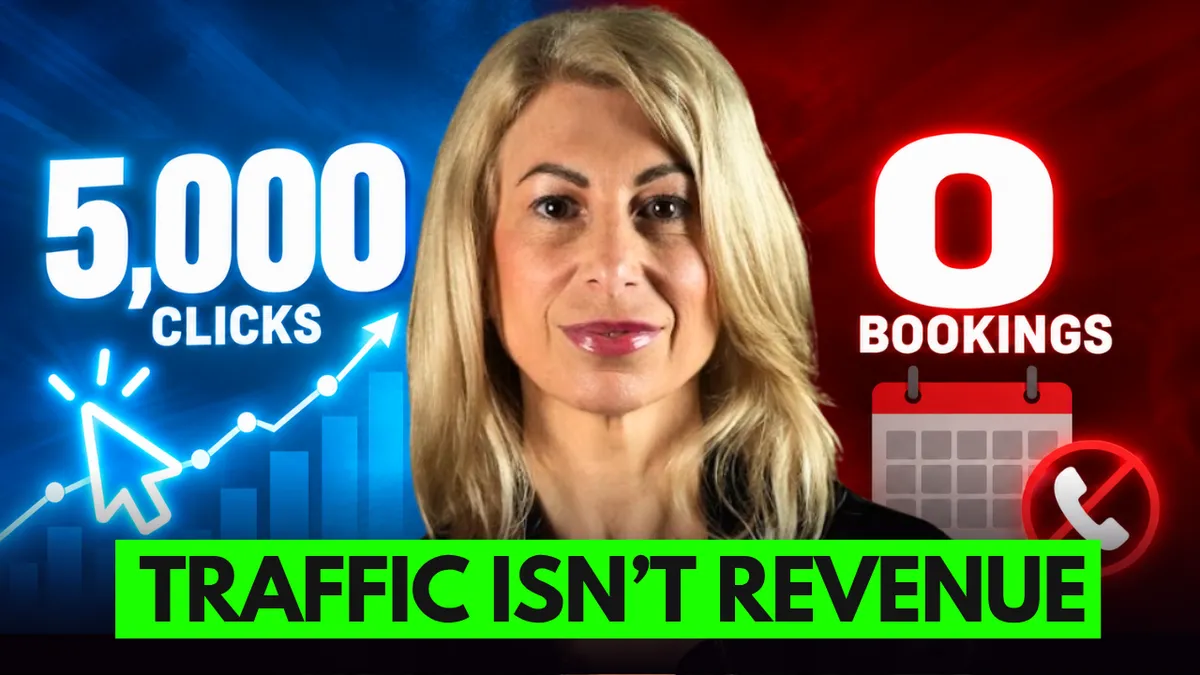
8 Principles That Actually Drive Results
If you are investing in paid advertising across multiple locations and the results are not where you expected them to be, the problem may not be Google, Meta or your agency.
Often, the real issues appear before a campaign ever goes live. Your strategy, offer, local messaging, landing pages and customer journey all influence what happens after someone sees your ad.
The good news is that multi-location businesses have something many single-location businesses do not: multiple markets generating data and insights. When you know how to use that information, each location can help you make the wider business stronger.
Here are eight principles to consider before you put more money into paid advertising.
1. Solve the customer's problem, not your own marketing problem
One of the most common mistakes in paid advertising is making the advertisement all about the business.
Award-winning. Trusted. Family-owned. Thirty years of experience. Local experts.
Those details can help establish credibility, but they are rarely what prompted someone to search in the first place.
People search because they need something.
A customer looking for a dentist might search dentist near me. Someone dealing with their tax might search for help with tax. A business owner looking for equipment may search for a specific product or solution.
That search gives you valuable insight into what the customer wants. Your advertising should respond to that intent rather than simply listing reasons your business is great.
Before writing an ad, ask: What is this person trying to solve, and what would make them want to take the next step with us?
That question should influence your keywords, messaging, offer and call to action.
2. Build local relevance into a strong overall brand
A multi-location business needs to achieve two things at once: consistency and relevance.
Using exactly the same campaign across every location may seem efficient, but each market has its own competition, customers and priorities. One area may be particularly price-conscious, while another may place greater value on convenience, expertise or premium service.
This does not mean creating a completely different brand for every location. That would be a very expensive way to give your marketing team a headache.
Instead, keep the core brand consistent while adapting the message to the market. Consider the language customers use, the services they are searching for, the local competition and the reasons people choose your business in that particular area.
This balance between brand consistency and local relevance is an important part of multi-location marketing.
3. Measure what happens after the click
A campaign can generate impressive numbers without generating impressive business results.
Clicks, impressions and website traffic tell you how people are interacting with your advertising, but they do not tell the whole story. The more important question is what happens next.
Are people making enquiries? Calling your business? Booking appointments? Requesting quotes? Buying?
Your reporting should connect advertising activity with the outcomes that matter commercially.
For example, 50 qualified enquiries may be considerably more valuable than 5,000 website visits from people who were never likely to become customers.
This is why your lead generation strategy and tracking need to work alongside your advertising. The aim is not to generate activity for the sake of activity. It is to create measurable opportunities for the business.
4. Treat optimisation as an ongoing process
A campaign does not become finished simply because it is live and generating leads.
Digital advertising is constantly changing. Search behaviour shifts, competitors adjust their offers, platforms introduce new features and the way people respond to advertising evolves.
That means a campaign that performed well last year may have untapped opportunities today.
Sometimes the improvements are surprisingly practical. Reviewing headlines and descriptions, strengthening calls to action, adding relevant assets, improving extensions, testing creative variations and refining landing page relevance can all contribute to better performance.
5. Give the click somewhere relevant to go
Getting someone to click your advertisement is only half the job. If the ad promises a specific solution but sends the customer to a generic homepage, you create unnecessary work for them. They now have to search through your website to find the information they were promised.
Think of it like walking into a shopping centre looking for one particular store and being told, It is somewhere in the building. Technically helpful, but not exactly a great customer experience.
Your landing page should pick up where the advertisement leaves off. It should confirm that the customer has arrived at the right place, provide the information they need and make the next action clear.
For multi-location businesses, that may also mean making it obvious which location serves the customer and how they can contact or book with that location.
A relevant landing page reduces friction and gives the advertising a better chance of turning interest into action.
6. Look beyond the campaign to the customer journey
Not every customer is ready to buy the first time they see an advertisement.
They may click through, browse your website, check your reviews, compare competitors and leave. They might return later after seeing another advertisement or piece of content before finally making an enquiry.
That means paid advertising is one part of the customer journey, not the entire journey.
If people are clicking but not converting, look at what happens around the campaign. Is the offer clear? Does the website answer their questions? Are reviews and proof easy to find? Is the enquiry process straightforward? Does someone respond quickly when a lead comes through?
These factors can influence the final decision just as much as the advertisement itself.
The better each stage connects to the next, the less likely you are to lose a potential customer between the click and the conversion.
7. Use your locations as a source of intelligence
Having multiple locations gives you something incredibly valuable: comparisons.
If one location consistently outperforms another, do not automatically assume the weaker location needs more advertising.
First, investigate what the stronger location is doing differently.
Look at its offer, reviews, local messaging, website experience, enquiry process and customer experience. There may be a specific factor contributing to its performance that can be tested elsewhere.
This does not mean copying one location word for word. Local markets still have their differences. But successful locations can reveal patterns that would otherwise be difficult to identify. Instead of treating each location as a separate marketing exercise, use the network as a learning system. Your best-performing location may already be showing you what customers respond to.
8. Fix the foundations before amplifying them
Paid advertising can put more people in front of your business, but it cannot fix fundamental problems within it.
If your offer is unclear, your customer service is inconsistent or your website creates friction, more traffic will not solve the underlying issue.
In fact, it can make the problem more obvious because more people are experiencing it.
Advertising is an amplifier. The stronger the foundations underneath it, the more useful that amplification becomes.
What this means for your advertising budget
If your paid advertising is not producing the results you want, the answer is not automatically to spend more.
Start by looking at the fundamentals. Are your ads responding to genuine customer demand? Is each location being treated according to its market? Are you measuring enquiries and sales rather than just clicks? Are your campaigns being actively improved? Does the landing page match the advertisement? Is the customer journey easy to navigate? And are your strongest locations being used to inform the rest of your strategy?
These questions can uncover opportunities that are easy to miss when you focus solely on the advertising dashboard.
The goal of paid advertising is not to buy more clicks. It is to create more of the right opportunities for your business.
Is your advertising performing as well as it could?
If you are already investing in Google Ads and want a clearer view of where your campaigns could improve, TMF offers a complimentary digital advertising audit.
We can review your current campaigns, identify opportunities and provide practical recommendations based on what we find.
If you would like to see where your advertising could be improved, book a strategy call with The Marketing Factory.
You can also watch or listen to the full TMF podcast episode for the broader conversation behind these eight principles and more practical insights into paid advertising for multi-location businesses.


Head Office (Brisbane)
Level One, 88 Tribune Street
South Brisbane QLD 4101
0434 520 902
COMPANY
CUSTOMER CARE
LEGAL
FOLLOW US




© 2026 The Marketing Factory - All Rights Reserved.