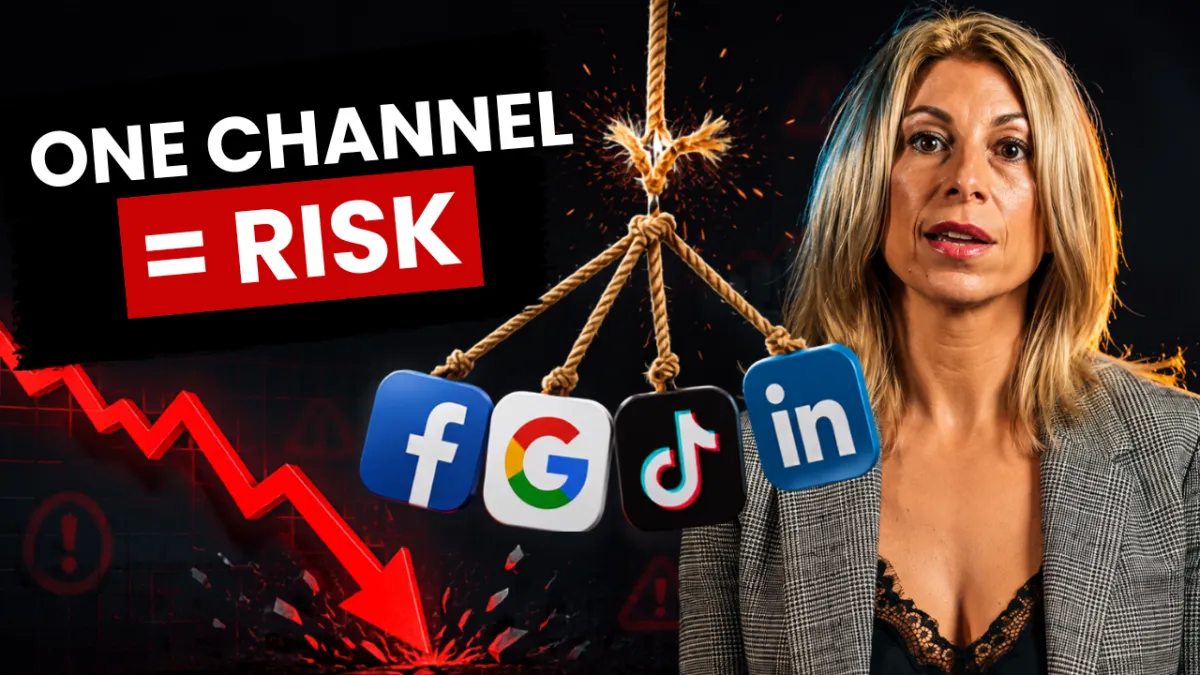
What Happens If Your Best Marketing Channel Disappears Tomorrow?
Imagine opening your dashboard tomorrow morning and seeing the numbers you never want to see.
Leads are down. Website traffic has dropped. Sales enquiries have slowed to a crawl.
Nothing changed about your product. Your team didn’t suddenly stop performing. Your customers didn’t disappear overnight. But one thing did change, the platform you rely on most stopped working in your favour. A Meta algorithm shift. A Google update. Rising ad costs. A disabled ad account. A tracking issue. A platform outage.
For many businesses, that’s all it takes to turn a strong growth month into a panic response.
If most of your leads come from one marketing channel, that’s not just a strategy issue. It’s a business risk.
The hidden danger of relying on one marketing channel
When a particular channel is performing well, it’s easy to lean harder into it.
Maybe Meta ads are delivering consistent leads. Maybe Google search is generating strong intent traffic. Maybe referrals have carried your business for years. At first, that feels efficient. Why spread your efforts when one channel is already working right?
Because success often creates comfort, and comfort can quietly kill strategic thinking.
Businesses stop diversifying when they believe their best-performing channel will always stay strong. But marketing platforms are constantly changing. Algorithms evolve. Competition increases. Costs rise. Consumer behaviour shifts.
What performs brilliantly today may become unreliable much faster than expected.
When your growth depends too heavily on one source, you haven’t built a stable marketing engine. You’ve built a dependency.
Why this is especially risky for growing businesses
This problem becomes even more serious for businesses with multiple locations, sales teams, franchise networks, or aggressive growth targets.
When one channel powers most of the pipeline, any drop in performance creates a ripple effect across the business.
That can mean:
sales teams missing targets
store locations feeling pressure
budget decisions becoming reactive
leadership losing confidence in the marketing strategy
internal blame replacing clear decision-making
When one platform carries too much weight, even a small disruption can create outsized stress. This is why many businesses don’t realise they have a marketing problem until performance starts falling. By then, they’re not calmly adjusting strategy. They’re reacting under pressure.
Borrowed audiences Vs owned audiences
One of the most important distinctions in modern marketing is this, platforms give you borrowed attention. Your database gives you owned attention. If your Instagram account disappeared tomorrow, what would your business still control?
Would you still have:
an email database
SMS subscribers
a CRM with active customer nurturing
loyalty program members
repeat customer relationships
a community you can reach directly
Or would your visibility vanish with the algorithm?
This is where many brands become vulnerable. They spend years building an audience on platforms they do not own, then panic when those platforms change the rules.
Building your business entirely on third-party platforms is like building your house on rented land. It can work for a while, but you’re still operating on someone else’s terms.
Why diversification is not just safer, but more profitable
Diversification is often framed as a protective move, and it is. But it’s also a growth move.
The strongest marketing systems do not expect one channel to do everything. They use multiple channels for different purposes across the customer journey.
For example:
Meta ads are strong for discovery, awareness, and retargeting
Google is powerful for high-intent searches and immediate action
Email marketing supports nurturing, retention, and repeat purchases
SEO builds long-term visibility and compounding traffic
SMS creates urgency and immediate engagement
Partnerships and referrals build trust and generate warmer leads
When these channels work together, they create a more stable and more effective marketing ecosystem. Awareness from one channel strengthens performance in another. Retargeting becomes more effective. Trust builds faster. Conversions improve. Retention increases.
In other words, well-connected channels amplify each other.
Signs your business may be too dependent on one channel
If you’re unsure whether this applies to your business, start with a simple audit.
Ask yourself:
Where do most of our leads currently come from?
If one source dominates heavily, that’s a warning sign.What audiences do we actually own?
Do you have direct access to your customers outside of social or paid platforms?What happens if this channel underperforms next month?
Would the business adjust, or would revenue take a serious hit?Are our channels connected strategically?
Or are they operating in silos with no customer journey behind them?Are we investing in long-term brand building as well as short-term lead generation?
If every activity is focused only on immediate sales, future stability may be weak.
These questions can reveal whether you have a strategy or simply a strong-performing dependency.
The most resilient businesses are not the ones that found one magic platform. They are the ones that built a marketing ecosystem. They understand that no platform stays easy forever. They know algorithms shift, ad costs rise, attention moves, and customer behaviour changes.
Instead of putting all their growth pressure on one source, they build a system that includes visibility, conversion, retention, and ownership.
That means:
attracting new audiences across multiple channels
capturing and nurturing customer data
creating repeat engagement beyond paid ads
reducing reliance on any single platform
building momentum that can survive change
Because when one channel slows down, the rest of the system keeps working.
And that is what sustainable growth really looks like.
A question every business owner should ask
If your best-performing marketing channel disappeared tomorrow, would your business keep growing or would it panic?
That question is uncomfortable, but it’s incredibly important. Because if one platform controls your pipeline, your growth is more fragile than it looks. The smartest businesses are no longer just building campaigns. They are building marketing ecosystems that can handle change, reduce risk, and support long-term growth.
