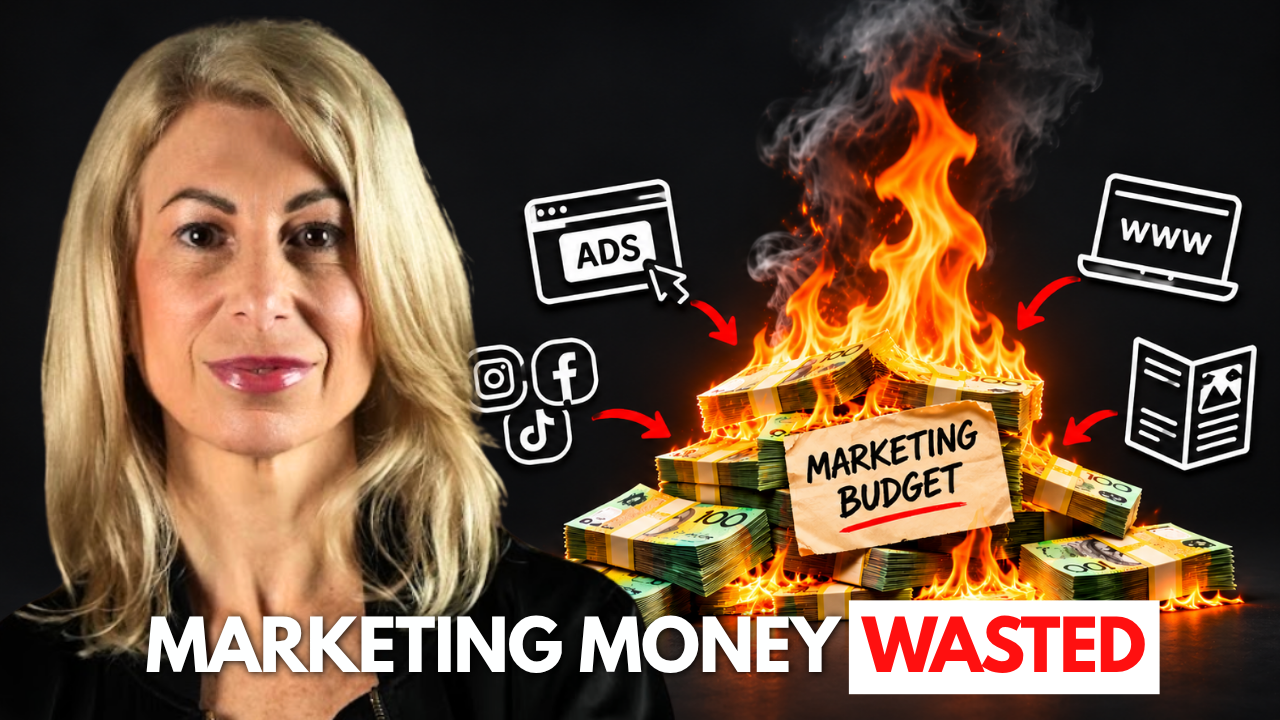
The Hidden Cost of Marketing Without a Strategy
Have you ever looked back at your marketing expenditure over the past 12 months and wondered what it actually achieved?
You invested in Google Ads, sponsored events, redesigned your website, produced videos, refreshed your branding, hired new suppliers and tried different social media platforms. Your business was certainly active. But can you confidently say those investments moved the business closer to its goals?
This is where many businesses unknowingly pay what we call the strategy tax. It is the hidden cost of doing marketing without a clear strategy to guide it. And it goes far beyond money spent on campaigns that fail to deliver. It includes wasted time, duplicated efforts, inconsistent messaging, lost momentum and opportunities that never reach their full potential.
The uncomfortable truth is that you can spend thousands on marketing, work with talented suppliers and keep your team incredibly busy, yet still struggle to achieve meaningful business growth. Not because your marketing team isn't working hard enough, but because all that effort may not be moving in the same direction.
The problem isn't how much marketing you're doing. It's whether it's moving your business forward.
Most businesses aren't short of marketing ideas. There is always another campaign to launch, another platform to explore or another opportunity promising better results. The sales team wants more leads, the CEO wants greater brand awareness, and someone comes back from a conference convinced the business needs to be on TikTok.
Individually, these ideas might have merit. But when decisions are made without considering the bigger business objectives, marketing becomes reactive. One month, the priority is generating leads. The next, it's brand awareness. A few months later, the business is redesigning its website because someone believes that is what will solve the problem. Before long, the marketing budget is spread across activities that have little connection to one another.
Business owners need to recognise the difference between marketing activity and marketing progress. Activity tells you what has been done. Progress tells you whether those actions are helping achieve your business objectives. Without a clear strategy, you can end up measuring how much marketing you've produced rather than what it has contributed to the business.
Every time you start again, you lose more than money.
One of the most overlooked costs of marketing without a strategy is lost momentum.
Think about how often businesses change agencies, designers, copywriters or marketing suppliers because they aren't seeing the results they expected. Every new supplier needs time to understand the business, its customers, brand positioning, history and objectives. Campaigns get rebuilt, messaging changes and valuable knowledge is lost in the transition.
It is much like changing builders halfway through constructing your home. Each new builder might bring good ideas and skills, but without a consistent plan, you risk spending more time and money without getting any closer to the finished result.
The same applies to your brand. Customers need consistency to recognise, understand and trust your business. When your messaging, positioning and visual identity constantly change, you make it harder for people to remember what you stand for. Brand recognition isn't built through constant reinvention. It comes from consistently communicating the right message to the right audience over time. Every unnecessary change can weaken the recognition and trust your business has worked hard to establish.
You've hired the specialists. But who's connecting the dots?
Having several marketing suppliers isn't necessarily a problem. In fact, bringing together specialists in web development, graphic design, social media, SEO, advertising and video production can give your business access to valuable expertise.
But here is the question many business owners overlook.
Who is making sure everyone is working towards the same business objectives?
Your website developer is focused on building a better website. Your videographer wants to produce quality content. Your advertising agency wants to improve campaign performance. Each supplier is looking at the business through the lens of their particular expertise. None of them is necessarily responsible for deciding whether those activities are the most important investments your business should be making right now.
Without strategic leadership, you can have a group of capable suppliers delivering good work individually, but no one ensuring that their efforts contribute to a shared direction. What you need is someone looking at the bigger picture, connecting the different marketing activities and making sure every supplier understands their role in achieving the business objectives. That's the difference between simply managing marketing tasks and providing marketing leadership.
Sometimes, the best marketing decision is knowing what to ignore.
There is always something new competing for your attention. Artificial intelligence, emerging social media platforms, advertising trends and new content formats can make business owners feel that they're falling behind if they aren't trying everything.
But chasing every new opportunity comes at a cost. Each initiative requires money, time, resources and attention that could be better invested elsewhere. This is shiny object marketing, where businesses move from one idea to another without giving any of them the focus and consistency needed to deliver meaningful results.
A strong marketing strategy gives you the confidence to say no. It helps you distinguish between opportunities that genuinely support your business objectives and those that are simply attractive because they're new. More importantly, it gives your team a framework for making decisions. Instead of every marketing meeting starting with, "What should we do next?", the conversation becomes, "What's next on our plan?" That may sound like a small difference, but it can save countless hours, prevent unnecessary spending and keep everyone focused on what matters.
Stop paying for marketing without direction.
If your marketing feels busy but isn't delivering the commercial progress you expected, it may be time to stop asking what else you should be doing and start asking whether you're doing the right things in the first place.
At The Marketing Factory, we help businesses bring their marketing activities, teams and suppliers together through strategic direction and purposeful execution. If you're ready to stop guessing where your marketing budget should go and start making more informed decisions, book a strategy call with our team. Let's look at where your marketing is now, where your business needs to go and what needs to happen to get there.
Your business doesn't need more marketing for the sake of doing more. It needs a strategy that makes every marketing investment count.
